
MLB Trade Analysis: Texas Rangers and New York Mets Swap Marcus Semien for Brandon Nimmo
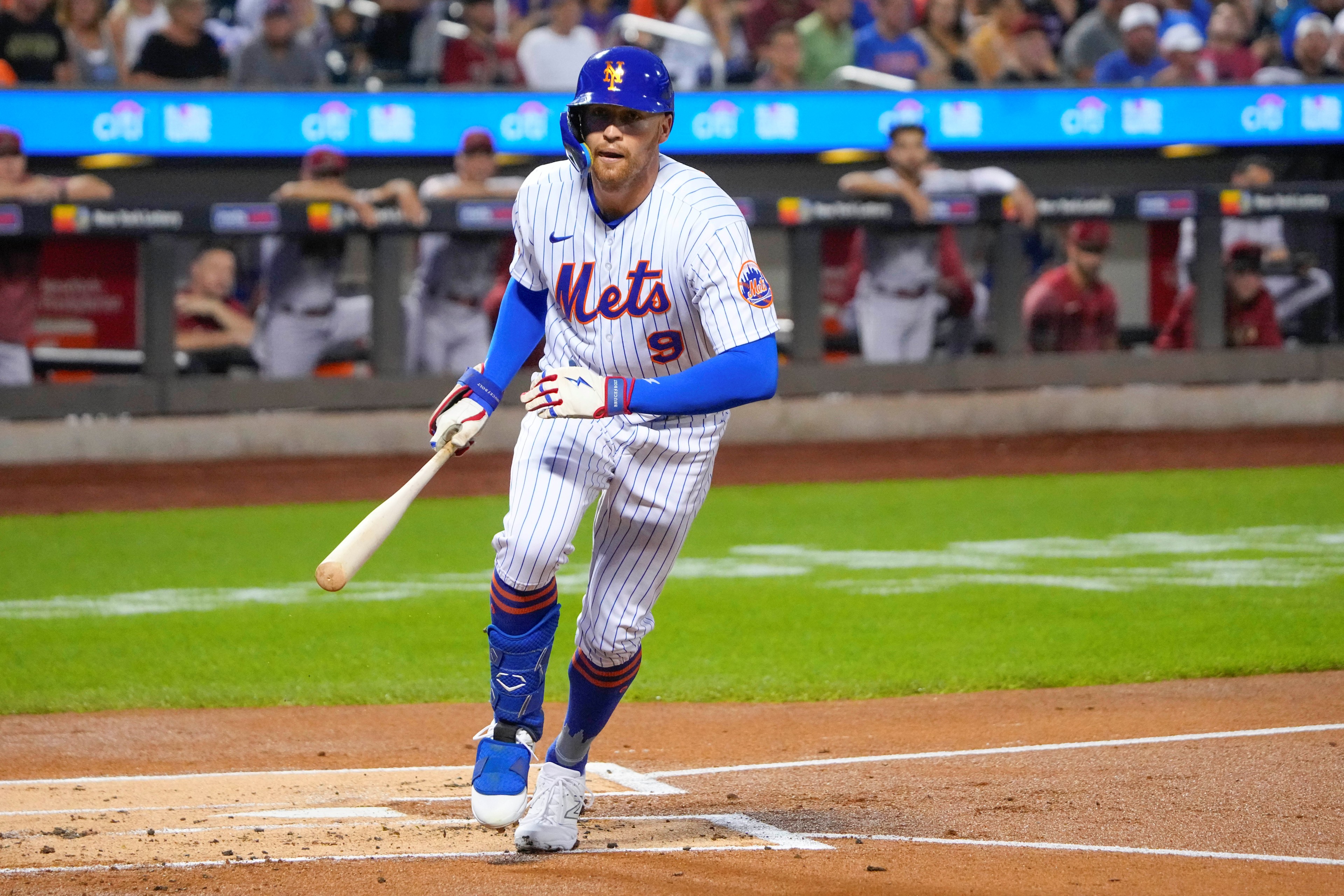
The MLB trade market has been heating up, and the latest move involves the Texas Rangers and New York Mets exchanging two established players. According to ESPN’s Jeff Passan, the Rangers and Mets are finalizing a straight-up player swap of Marcus Semien for Brandon Nimmo. This trade is an unc-for-unc variety, with both players having significant contract implications. Semien, 35, is owed $72 million over the next three years, while Nimmo, who will turn 33 in 2026, is owed $101.25 million over the next five years.
The trade has sparked interesting discussions, with some analysts focusing on the marginal differences in the players’ values. Semien is a defensively valuable second baseman, while Nimmo is a slightly younger and more offensively productive corner outfielder. However, the average annual value of their contracts is relatively close, with Semien’s contract carrying a slightly higher value. As the Rangers are laden with expensive contracts, the $4 million annual difference could be a factor in the trade. According to Baseball-Reference.com, Semien’s defensive WAR (wins above replacement) has been consistently higher than Nimmo’s over the past few seasons.
Sentimental Value and the End of an Era
The trade also carries sentimental value, as Semien was one of the last remnants of the 2023 Rangers squad that won the World Series. This marks the end of an era for the Rangers, who have struggled to make the playoffs since their championship win. On the other hand, Nimmo, who signed an eight-year contract before the 2023 season, will not complete his career as a Met, having waived his no-trade clause to facilitate the deal. As noted by MLB.com, the trend of one-team players is becoming increasingly rare, with Nimmo and Aaron Nola being two of the most notable candidates before the trade.
From a statistical perspective, the trade is expected to have a minimal impact on both teams’ overall performance. However, it will be interesting to see how Nimmo adapts to the Rangers’ home stadium, which is less walk-friendly than the Mets’ Citi Field. According to Fangraphs, the Rangers’ stadium has a lower walk factor than the Mets’, which could affect Nimmo’s ability to sprint to first base on walks. While this may seem like a minor aspect of the game, it could have a significant impact on Nimmo’s overall performance and the team’s strategy.
Conclusion
In conclusion, the trade between the Texas Rangers and New York Mets is a complex one, with both teams exchanging established players with significant contract implications. While the trade may not have a major impact on the teams’ overall performance, it marks the end of an era for the Rangers and the beginning of a new chapter for Nimmo. As the MLB season progresses, it will be interesting to see how both teams adapt to the changes and how Nimmo’s unique skillset is utilized by the Rangers. For more information on the trade and its implications, visit ESPN’s MLB page.