

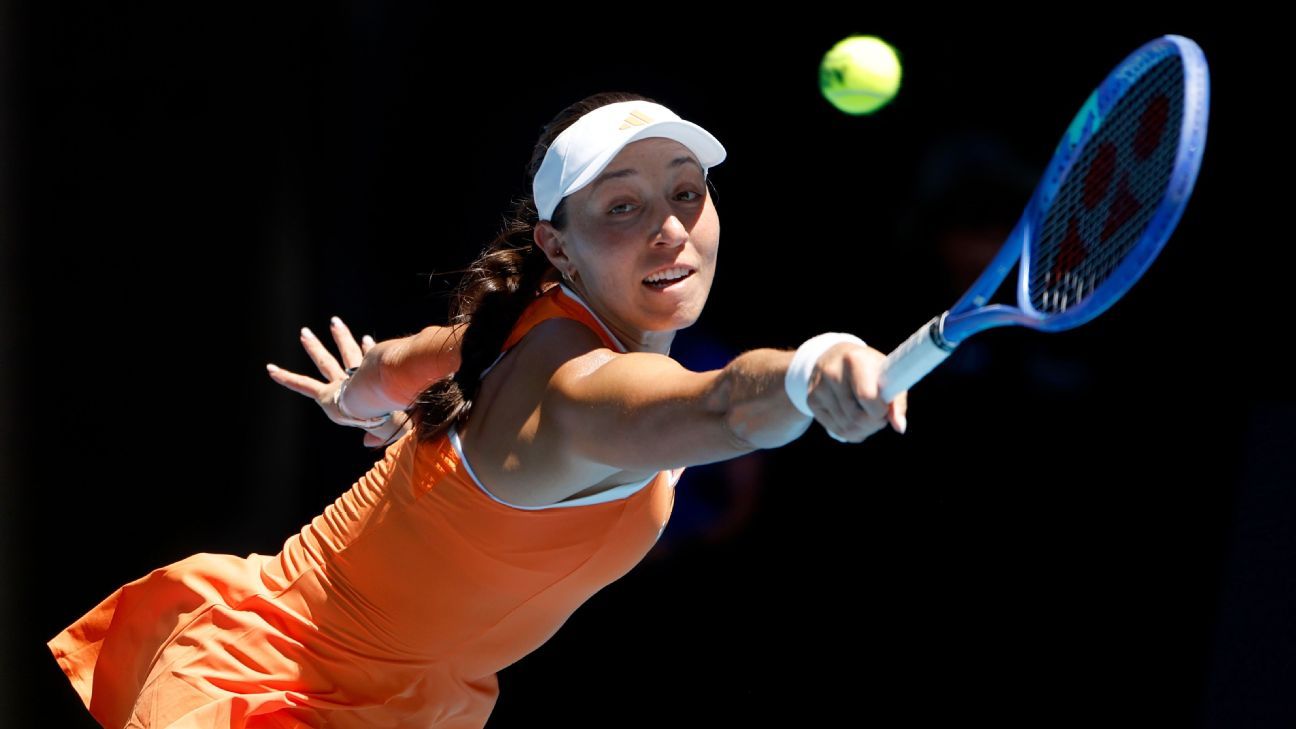
Jessica Pegula Makes a Statement at the Australian Open
MELBOURNE, Australia — Jessica Pegula’s Australian Open campaign has been a masterclass in composure and smart tennis, and on Monday, she added a new dimension to her game: a statement victory. The world No. 6 defeated defending champion and close friend Madison Keys in Rod Laver Arena, dismantling her game with intelligence and discipline, and showing a level of tactical nous that feels every bit like a player who is ready to win a Grand Slam.
The 31-year-old advanced to the quarterfinals with a 6-3, 6-4 victory over ninth-seeded Keys, extending her flawless run and still yet to drop a set. This was already the most intriguing matchup of the day, pitting Keys’ explosive, powerful shotmaking against Pegula’s efficiency. What unfolded was a lesson in how to combat an opponent’s strengths with shape, variety, and pressure.
“[I’m] happy with the way I was able to serve, I think, on some really big, key points, execute my strategy,” Pegula said after the match. “I have been seeing, hitting, moving, I feel like very well this whole tournament, and to be able to keep that up against such a great player as Madi and defending champion was going to be a lot tougher of a task today, but I think I was still able to do that really well.”
From the opening games of the first set, Pegula’s intent was clear. She was always on the front foot, stepping forward on Keys’ serve to break early, and had service games with impeccable placement to constantly force movement in her opponent, rather than allowing Keys to plant herself and get the upper hand in points with aggressive returns.
Wide serves, angled groundstrokes, looping forehands, slices, and then a flat cross-court strike. Anything that prevented the 2025 winner from finding rhythm, Pegula did. As ESPN noted, Pegula’s strategy was to “combat an opponent’s strengths with shape, variety, and pressure,” and it paid off.
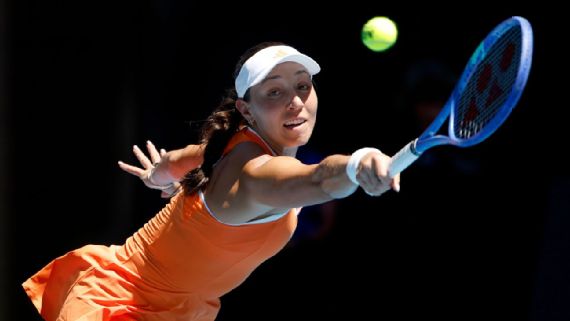
Keys still produced the spectacular, of course. There were big serves, and moments of brilliance, including several big backhand winners down the line that reminded everyone why her ceiling remains as high as anyone’s on tour — and Pegula that she’d need to stay consistent and not drop her level or the threat of a Keys comeback would always be there.
A Lesson in Consistency
The numbers told the story in a really brutal way. After 10 games, with Pegula holding a 6-3, 1-0 lead, Keys had hit 14 winners but also 20 unforced errors. Pegula? Five and five. By the end of the match, Keys finished with a whopping 26 winners but 28 unforced errors. Pegula? Twelve and 13.
It was high-risk, powerful, ballstriking tennis clashing against a high-IQ, steady game, and the latter is what prevailed. As WTA Tennis noted, Pegula’s “consistency and discipline” were key to her victory.
The second set followed much the same pattern with Pegula holding a slight lead the whole way. It was a physical edge, but also a psychological one. She continued to absorb the Keys serve, she wouldn’t blink, she forced the extra balls, hit the angles, and her execution under fourth-round pressure was immense.
Even on serve, where an argument could be made that Pegula might be slightly vulnerable, there was a clear contrast. Just one double fault compared with six. As Pegula noted, “It was really important to focus on my serve… I lost that game. And I was kind of, like, you know what… she hit a couple good shots, whatever. Just don’t dwell on it that much.”
Shifting Narratives
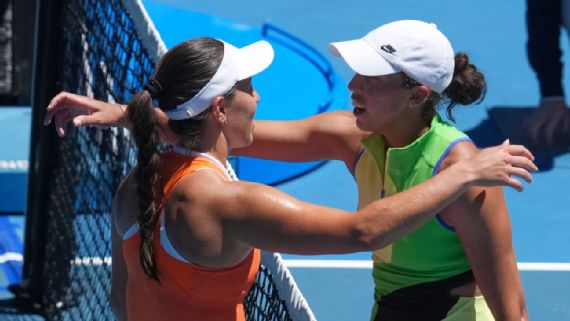
There was so much added interest in this matchup. The two co-host “The Player’s Box” podcast and are close friends. It was the first women’s Australian Open match between top 10-seeded Americans since Serena Williams and Lindsay Davenport played in the 2005 final.
Pegula now moves into quarterfinals, playing incredibly efficient tennis that can unravel most rivals. No sets dropped and only 17 games lost. For years, her consistency has been admired, but critics had often labeled her the great quarterfinal regular. Maybe that’s fair — she hadn’t broken through that stage of a Slam until 2024.
She arrived in Melbourne still chasing that major title, and those same questions still lingered. When will she finally break through? When will she finally claim the ultimate? Is she “too consistent”? Are there enough weapons? Is she great without being a champion?
For Pegula, it’s all just outside noise that she doesn’t think about. “I felt like if I’m making quarters of a Slam, that’s pretty good,” she said. “So I never really understood the negativity towards it, or I guess just the headline of, you know, how does she get past the quarters?”
It’s performances like this, against the defending champion no less, that offer the best possible counter-argument. It’s performances like this that also suggest maybe that breakthrough isn’t coming, maybe it’s actually already in play. And maybe it’s time to shift the narratives.
Pegula’s task doesn’t get any easier: She’ll face No. 4 seed Amanda Anisimova in the quarterfinal. Though Pegula is 3-0 against her, this will be the first time they’ve played at the Grand Slam level. As the Australian Open website noted, Pegula is