

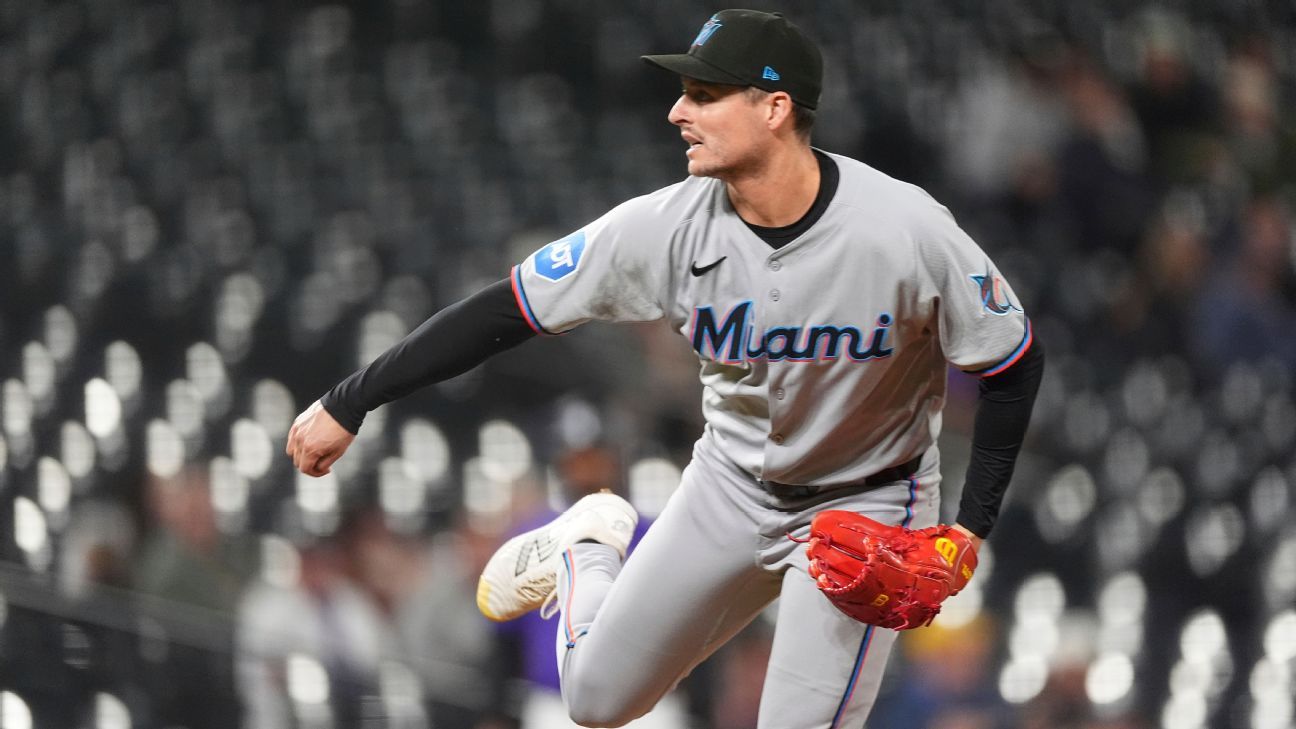
Miami Marlins Win Final Salary Arbitration Case of the Year
The Miami Marlins have emerged victorious in the final salary arbitration case of the year, defeating Calvin Faucher and leaving players with an 8-4 advantage in hearings. This decision was made by a panel of arbitrators, including Robert Herman, Paul Radvany, and Walt De Treaux, who issued their ruling on Saturday, a day after hearing arguments.
Faucher, a 30-year-old right-hander, was awarded the club’s $1.8 million offer, rather than his requested $2.05 million. In the 2025 season, Faucher had a notable performance, with a 3.28 ERA in 65 relief appearances, saving 15 games in 20 chances. He also struck out 59 and walked 24 in a career-high 60⅓ innings. Faucher earned $775,500 last year and was eligible for arbitration for the first time as a so-called Super 2, a player among the top 22% by service time among those with at least two but less than three years of major league service.
Context and Implications
The outcome of this arbitration case has significant implications for the Miami Marlins and Calvin Faucher. Faucher’s performance in the 2025 season demonstrated his value to the team, and his request for $2.05 million reflected his contributions. However, the arbitrators’ decision to award him $1.8 million suggests that they considered factors such as his service time, performance, and market value. This decision may also set a precedent for future arbitration cases, influencing the way teams and players approach salary negotiations.
According to data from the Major League Baseball Players Association, players have a 8-4 advantage in arbitration hearings this year. Notable players who won their cases include Tarik Skubal, who was awarded a record $32 million in his hearing with the Detroit Tigers, and Tyler Stephenson, who was awarded $6.8 million in his case with the Cincinnati Reds. Other players who won their cases include Kris Bubic, Yainer Diaz, Kyle Bradish, Dylan Lee, Graham Ashcraft, and Edwin Uceta.
Historical Context and Trends
Since the arbitration process began in 1974, owners have a 362-278 advantage in arbitration cases. However, in recent years, players have been more successful in their hearings. This shift may be attributed to various factors, including changes in the market, advancements in data analysis, and the increasing sophistication of player agents. The Miami Marlins’ victory in the Faucher case marks a significant milestone in the 2026 arbitration season, and its implications will be closely watched by teams, players, and fans alike.
For more information on the arbitration process and its history, readers can refer to the official website of the Major League Baseball Players Association or reputable sources such as ESPN, MLB.com, or The Athletic. These resources provide in-depth analysis, expert commentary, and comprehensive coverage of the arbitration process and its impact on the sport.