
Unpacking the Role of VAR in the Premier League: A Deep Dive into Decision-Making
The introduction of the Video Assistant Referee (VAR) in the Premier League has been a subject of controversy, with debates surrounding its effectiveness and accuracy. As the season progresses, it’s essential to examine the major incidents and understand the process behind VAR decisions. In this article, we’ll delve into the world of VAR, exploring the protocol and laws of the game that guide these crucial calls.
With the help of Andy Davies, a former Select Group referee with over 12 seasons of experience in the Premier League and Championship, we’ll analyze the decision-making process and provide insight into the rationale behind VAR interventions. Davies has operated within the VAR space in the Premier League, offering a unique perspective on the processes and protocols that unfold on match day.
Incident 1: Possible Handball Offence by Wolves Defender Emmanuel Agbadou
Referee: Michael Salisbury
VAR: Nick Hopton
Time: 38 minutes
In this incident, the shot from Manchester United winger Amad Diallo struck Agbadou’s arm, but referee Salisbury did not deem it a handball offence, allowing play to continue. The VAR checked and confirmed the referee’s call, deciding that the incident did not meet the criteria for a handball offence.
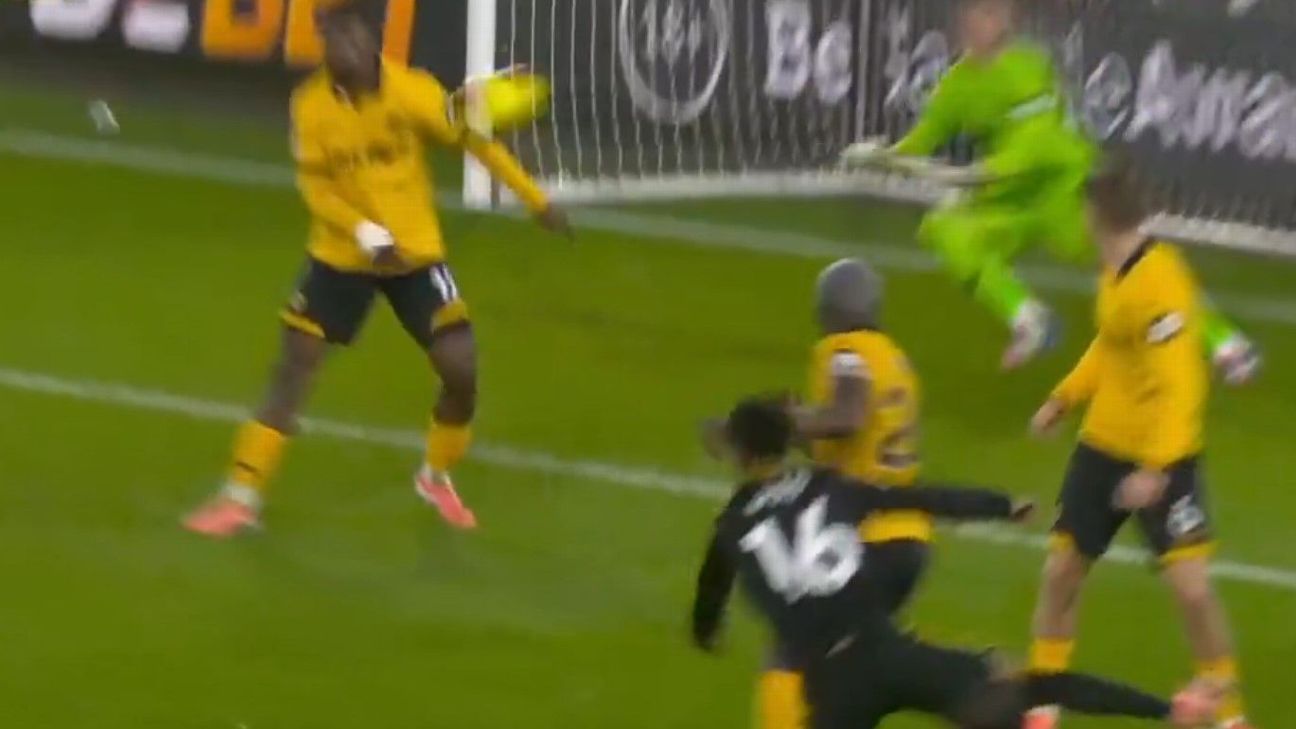
The VAR review process involves applying specific handball criteria to the available footage. The key considerations include whether the player deliberately touched the ball with their hand/arm and whether the player made their body unnaturally bigger. In this case, the ball struck Agbadou’s arm at speed, and the VAR felt that the area of the arm where the ball struck, combined with the level of movement, negated the possibility of an offence.
However, upon reviewing the incident, it appears that the ball struck the bottom of Agbadou’s short sleeve, meeting the criteria for a handball offence. Furthermore, there was a deliberate movement by the Wolves defender’s arm towards the ball, making his body unjustifiably bigger. An on-field review (OFR) should have been the outcome.
Incident 2: Possible Handball Offence by Wolves Defender Yerson Mosquera
Time: 80 minutes
In this incident, Amad’s shot struck the arm of Mosquera, who leaned into the ball, causing it to deflect off his upper arm. Referee Salisbury, with a clear view, did not consider it a handball offence, but the VAR disagreed, recommending an OFR.
The VAR review revealed that Mosquera not only leaned into the shot but also made a deliberate secondary movement of the arm towards the ball. After reviewing the footage via the OFR, referee Salisbury awarded United a penalty and sanctioned Mosquera with a yellow card.
This incident highlights the challenges of applying the handball law consistently, given the subjective considerations involved. However, in this case, the VAR intervention was correct, and the penalty award was justified.
Incident 3: Possible Handball by Brighton’s Georginio Rutter
Referee: Simon Hooper
VAR: Tony Harrington
Time: 90+1 minutes
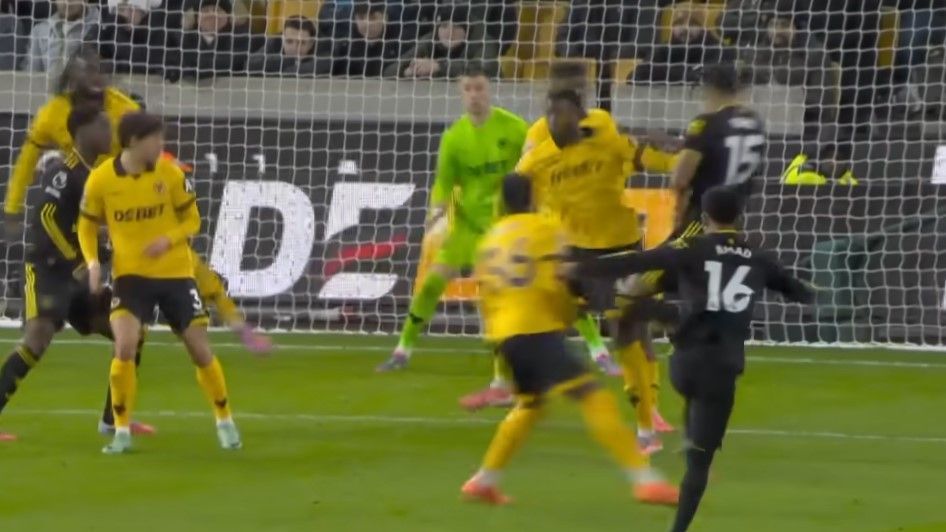
In the final minutes of the match, Rutter scored an equalizer for Brighton, but the ball appeared to strike his arm in the buildup. The VAR checked and confirmed the referee’s call, deeming that Rutter’s arm was in a natural position and that he did not deliberately handle the ball.
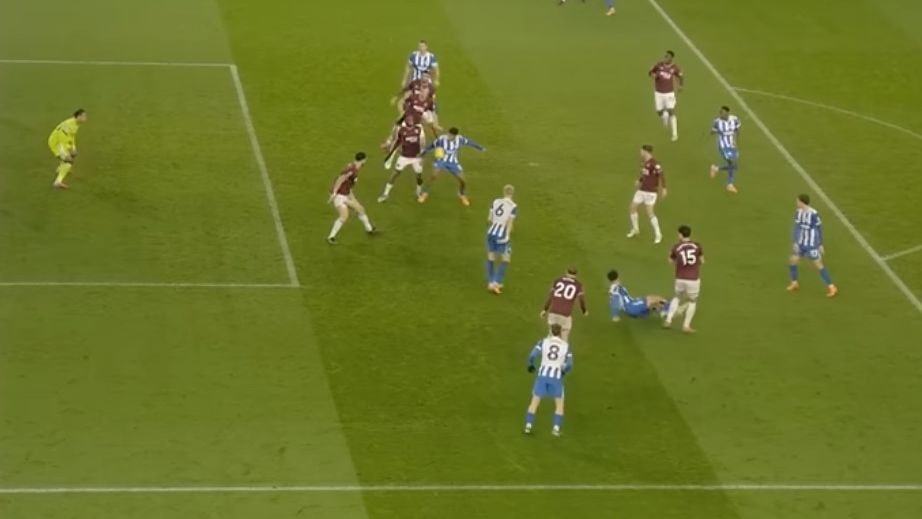
The VAR review centered around the ball striking Rutter’s arm in the buildup to the goal. The VAR determined that Rutter’s arm was in a natural and justifiable position, and the contact with his arm was not immediately prior to him scoring.
While this decision may be subject to debate, it’s essential to consider the laws of the game. According to the rules, if Rutter had scored from his initial shot, the goal would have been disallowed, regardless of whether the ball striking his arm was deliberate or otherwise. However, since the goal was scored in a subsequent phase of play, the offence was negated.
In conclusion, the VAR system is designed to assist referees in making accurate decisions, but it’s not foolproof. The incidents analyzed in this article highlight the complexities and challenges of applying the handball law consistently. As the Premier League continues to evolve, it’s crucial to refine the VAR protocol and ensure that referees and VAR officials are equipped to make informed decisions that impact the outcome of matches.