

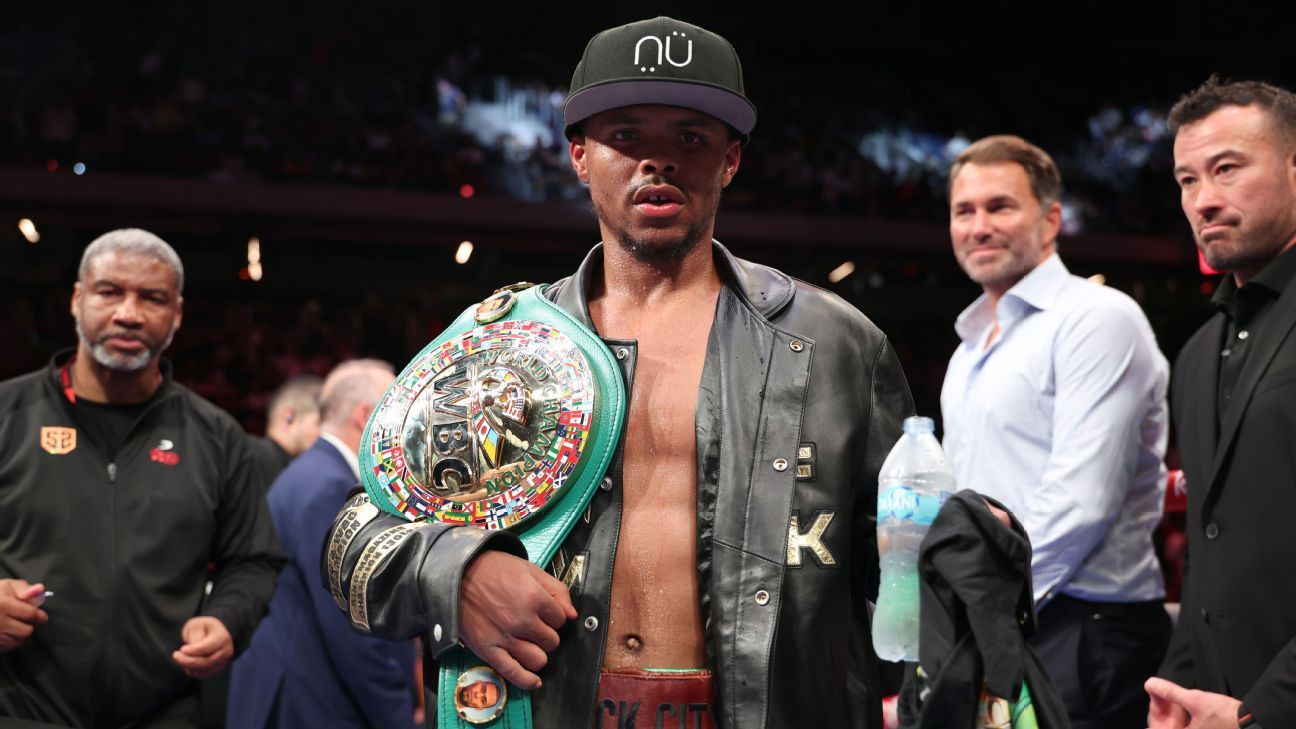
Shakur Stevenson Stripped of WBC Lightweight Title: A Dispute Over Sanctioning Fees
Days after his historic victory over Teofimo Lopez, where he claimed the WBO junior welterweight title, Shakur Stevenson found himself at the center of controversy. The WBC announced that they had stripped Stevenson of his lightweight title, a decision that Stevenson vehemently disputed.
At the heart of the dispute is a sanctioning fee, reportedly $120,000, that the WBC claims Stevenson failed to pay following his fight against Lopez. Stevenson, however, has fired back, accusing the WBC of acting unfairly and labeling them “crooks” for their handling of the situation.
The WBC’s Perspective: A Matter of Rules and Regulations
WBC President Mauricio Sulaiman has since come forward to provide the organization’s side of the story, shedding light on the events that led to Stevenson being stripped of his title. According to Sulaiman, Stevenson’s management team initially reached out to the WBC to arrange for a special version of the WBC title to be on the line for the Lopez fight. This is a practice allowed by the WBC’s rules when a champion in one division wishes to fight a champion in another weight division.
Sulaiman explained that the WBC agreed to this arrangement under the condition that all details would be formalized in writing. However, despite numerous attempts to finalize the agreement, Stevenson’s team failed to respond, leading to a situation where Stevenson was required to pay the sanctioning fee, which he avoided paying. This non-payment, Sulaiman clarified, is the reason behind the WBC’s decision to strip Stevenson of his lightweight title, which is now listed as “vacant” by the sanctioning body.
“It is a truly regretful situation,” Sulaiman reflected, emphasizing that the rules governing such situations are clear and apply to all champions. The WBC’s stance is that when a champion engages in a fight, they must abide by the rules, which include the payment of sanctioning fees.
Precedent and Implications
This situation is not without precedent. Months ago, a similar scenario played out with Terence Crawford, a close friend of Stevenson’s, who was also stripped of his title after failing to pay the required sanctioning fees. These incidents highlight the sometimes complex and contentious relationship between fighters, their management teams, and the sanctioning bodies that govern the sport.
The dispute between Stevenson and the WBC serves as a reminder of the importance of clears communication, adherence to rules, and the financial aspects of professional boxing. As the sport continues to evolve, instances like these underscore the need for transparency and fairness in the application of rules by sanctioning bodies.
For Stevenson, the focus now shifts to his future in the junior welterweight division, where he has just begun to make his mark. The controversy with the WBC, while significant, does not diminish his achievement in dethroning Lopez but rather adds a layer of complexity to his career trajectory.
As the boxing world watches how this situation unfolds, one thing is clear: the relationship between fighters, promoters, and sanctioning bodies is multifaceted and subject to disputes. The hope is that through open dialogue and a commitment to fair play, such disputes can be minimized, allowing the focus to remain on what truly matters – the sport itself.